Guide ccTLD : quand un domaine de code pays est meilleur que .com
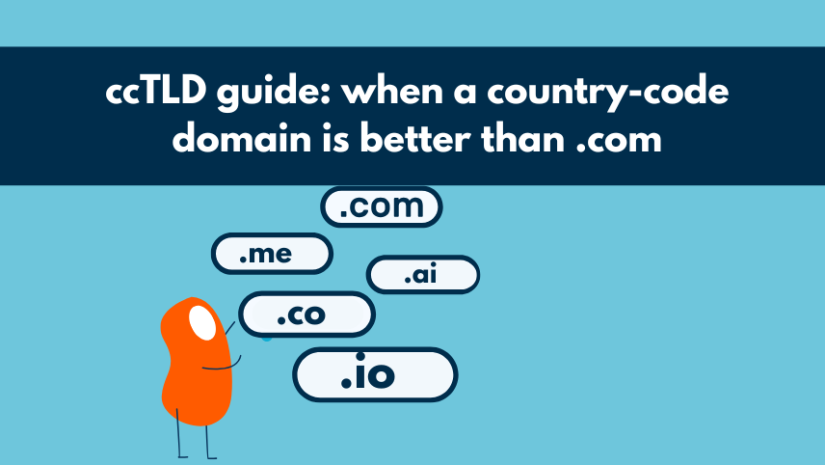
Vous lancez en Allemagne. Votre domaine doit-il se terminer par .de ou .com ?
Ce n'est pas une question triviale. L'extension de domaine que vous choisissez façonne la façon dont les utilisateurs locaux perçoivent votre site, comment les moteurs de recherche catégorisent votre contenu et à quelle vitesse vous pouvez vous tailler une présence crédible sur un marché spécifique.
Pendant des années, .com était la réponse par défaut pour tout. Cela a changé. Les domaines de premier niveau à code de pays (ccTLD) sont désormais un choix stratégique délibéré pour les entreprises qui savent exactement pour qui elles construisent.
Ce guide explique ce que sont les ccTLD, quand ils surpassent .com et comment décider lequel convient à votre situation — avec un cadre de décision concret, pas une théorie générale.
Qu'est-ce qu'un ccTLD ?
Un domaine de premier niveau à code de pays (ccTLD) est une extension de domaine à deux lettres attribuée à un pays ou territoire spécifique par l'IANA, l'organisme qui coordonne les normes de nommage sur Internet. L'attribution suit la norme ISO 3166-1 : .de pour l'Allemagne, .fr pour la France, .es pour l'Espagne, .pl pour la Pologne, .in pour l'Inde, .com.br pour le Brésil.
Le contraste est avec les domaines de premier niveau génériques (gTLD) — .com, .net, .org — qui n'ont aucune association géographique et peuvent être enregistrés par quiconque, n'importe où, à n'importe quelle fin.
Une nuance importante à connaître dès le départ : certaines extensions ont commencé comme des ccTLD mais ont franchi le pas vers une utilisation mondiale. Des extensions comme .io (Territoire britannique de l'océan Indien), .ai (Anguilla), .co (Colombie) et .me (Monténégro) sont officiellement des domaines à code de pays — mais en pratique, ils sont utilisés à l'échelle mondiale, et Google les traite comme des gTLD. Cela signifie qu'enregistrer l'un de ces domaines ne limite pas votre visibilité de recherche internationale comme le fait un ccTLD traditionnel.
Pourquoi choisir un ccTLD plutôt qu'un .com ?
Trois raisons — chacune fonctionne différemment, et toutes les trois ne s'appliqueront pas à chaque situation.
1. Confiance locale
Lorsqu'un utilisateur en France recherche un plombier local et voit .fr à côté de .com dans les résultats, il est plus susceptible de cliquer sur le résultat .fr. Ce n'est pas une théorie — des recherches montrent que les sites Web avec des ccTLD voient des niveaux de confiance de 10–15 % plus élevés de la part des utilisateurs locaux par rapport aux gTLD.
Dans certaines industries, cette différence de confiance se traduit directement par des taux de conversion. La logique est simple : une extension locale signale que cette entreprise est ici, qu'elle est pour vous, qu'elle comprend ce marché. Pour un restaurant à Barcelone, un cabinet d'avocats à Varsovie ou une clinique à Munich — ce signal vaut plus que la neutralité mondiale de .com.
2. Visibilité de recherche locale
Un ccTLD envoie un signal de pertinence géographique aux moteurs de recherche. Lorsque Google explore un domaine .de, il enregistre un point de données supplémentaire confirmant que ce site cible des utilisateurs allemands — ce qui peut soutenir la visibilité dans les résultats de recherche allemands.
Cela dit, la situation en 2026 est plus nuancée qu'auparavant. Google ne considère plus un ccTLD comme un raccourci vers les classements locaux. Un domaine .com avec un contenu correctement localisé, des backlinks locaux et des balises hreflang correctes peut performer aussi bien localement. L'extension de domaine est un signal parmi tant d'autres — pas un interrupteur magique.
Ne laissez pas cela vous décourager. Le meilleur argument en faveur de la visibilité des ccTLD en 2026 passe par le comportement des utilisateurs : les utilisateurs locaux cliquent plus facilement sur des domaines ayant une apparence locale. Des taux de clics plus élevés améliorent les métriques d'engagement sur la page, ce qui alimente les performances de recherche au fil du temps. L'effet est indirect mais réel.
3. Disponibilité des noms
Si vous avez déjà essayé d'enregistrer un .com court et mémorable pour une véritable entreprise, vous savez à quel point cet espace est encombré. L'espace de noms se remplit depuis 40 ans. Un nom qui a été pris sur .com depuis 2003 peut encore être disponible sur .de, .es ou .pl — et dans ce cas, le ccTLD vous donne non seulement un nom disponible mais aussi un nom géographiquement pertinent.
Pour les petites entreprises et les freelances construisant pour un marché local spécifique, c'est souvent l'argument le plus pratique. Vous n'avez pas besoin de payer un courtier des dizaines de milliers pour votrecompany.com lorsque votre alternative est disponible au prix d'enregistrement standard.
Quand un ccTLD est le bon choix
Voici quatre scénarios où un ccTLD est clairement la meilleure réponse.
Scénario 1 : Une entreprise locale servant un marché
Un restaurant à Barcelone. Une clinique dentaire à Manchester. Un électricien à Munich. Vos clients sont locaux, vos concurrents sont locaux, et votre profil d'entreprise Google pointe vers une adresse physique dans une ville.
Dans cette situation, un ccTLD est le choix naturel. Il semble familier aux utilisateurs locaux, s'aligne sur la façon dont les moteurs de recherche comprennent votre contexte géographique et signale un engagement envers le marché dans lequel vous êtes réellement. Il n'y a aucun avantage stratégique à utiliser .com si votre opération entière se trouve dans un seul pays.
- Extensions pertinentes pour les marchés européens : Voir les exigences d'enregistrement pour .de, .es, .pl, .fr, .it, et .nl.
Scénario 2 : E-commerce s'étendant sur de nouveaux marchés
Vous gérez une boutique en ligne basée en Pologne et vous lancez des versions tchèque et slovaque. Enregistrer des domaines spécifiques à chaque pays pour ces marchés — plutôt que des sous-dossiers sous votre site principal — donne à chaque audience locale sa propre présence de domaine.
Les utilisateurs locaux voient une adresse ayant une apparence locale. Les moteurs de recherche reçoivent un signal clair du pays. C'est une stratégie multi-marchés courante : les ccTLD comme domaines principaux pour chaque version régionale d'un site, chacune avec un contenu et des prix localisés. C'est plus de travail à gérer, mais pour le e-commerce, la différence de confiance dans les taux de conversion peut justifier les frais généraux.
Scénario 3 : Un freelance ou une agence construisant pour des clients locaux
Si vous construisez des sites Web pour des clients dont les clients sont locaux — une agence de marketing travaillant avec des PME espagnoles, un développeur web prenant en charge des clients de e-commerce portugais — enregistrer des ccTLD fait partie du service que vous fournissez.
Vos clients s'attendent à un domaine qui semble local, et vous êtes en mesure d'expliquer exactement pourquoi cela compte. Les clients qui comprennent cela ont tendance à le valoriser. Ceux qui ne le comprennent pas apprécieront que vous expliquiez la différence de confiance de 10–15 % en termes clairs et simples.
Scénario 4 : Une startup entrant sur un grand marché national
Une startup technologique entrant en Inde, au Brésil ou en Australie fait face à un défi spécifique : les utilisateurs locaux et les partenaires commerciaux veulent souvent voir un engagement local avant de faire pleinement confiance à une marque étrangère.
Enregistrer des extensions locales signale que vous avez fait cet engagement — vous ne ciblez pas simplement le marché à distance, vous êtes présent dans celui-ci. Cela compte surtout dans les marchés avec de fortes alternatives locales établies et un public habitué aux domaines à code de pays comme une attente de base.
Vous cherchez le ccTLD pour votre marché ?
Parcourez plus de 1 000 extensions de domaine sur Let's Domains — avec les exigences d'enregistrement et les prix listés pour chacun. Explorez notre Base de données de domaines.
Quand s'en tenir à .com à la place
Un ccTLD n'est pas la bonne réponse pour chaque situation. Voici quand .com reste le choix le plus solide :
- Vous construisez un produit mondial sans marché principal clair : Un outil SaaS utilisé dans 40 pays, une bibliothèque de développeurs, une API alimentée par l'IA — ceux-ci n'ont pas de caractère national. .com est plus neutre, plus universellement reconnaissable et n'envoie pas un signal géographique qui pourrait sembler limitant.
- Votre marque est déjà établie sur .com : Migrer loin de .com introduit un risque SEO, une complexité de redirection et un réel potentiel de confusion pour les utilisateurs. Si .com fonctionne, il n'y a pas de raison forte de l'abandonner. Envisagez d'enregistrer le ccTLD comme une redirection ou une mesure de protection de marque à la place.
- Vous prévoyez d'opérer dans cinq marchés ou plus simultanément : Gérer plusieurs ccTLD — chacun avec ses propres règles d'enregistrement, délais de renouvellement et exigences de contenu — crée un réel surcoût opérationnel pour une petite équipe. Dans ce scénario, un .com avec des sous-dossiers localisés (/de/, /fr/, /es/) est souvent l'approche la plus durable.
- Votre industrie est mondiale par nature : Outils de développement logiciel, instruments financiers, publication académique, ONG mondiales — les publics dans ces espaces sont habitués à .com et n'attendent pas ou ne valorisent pas particulièrement une extension locale.
Une note pratique : de nombreuses entreprises enregistrent les deux. Elles utilisent .com comme leur base mondiale et enregistrent le ccTLD pour leur marché principal comme une redirection ou un site local séparé. Si le budget le permet, c'est une couverture raisonnable — en particulier pour la protection de la marque. Un cybersquatter enregistrant votrecompany.de avant vous peut créer de réels problèmes à l'avenir.
ccTLD et SEO — la réponse honnête en 2026
Abordons la question que la plupart des gens se posent avant de s'engager dans une décision de domaine : Les ccTLD influencent-ils encore le SEO local ?
Oui — mais pas de la manière dont ils le faisaient auparavant, et pas comme un raccourci fiable.
Lorsque Google explore un domaine .de, il enregistre un signal géographique qui soutient l'association avec les résultats de recherche allemands. La documentation de Google elle-même confirme que les domaines à code de pays agissent comme des signaux géographiques dans ses systèmes de classement. Cette partie n'a pas changé.
Ce qui a changé, c'est le poids de ce signal par rapport à tout le reste. En 2026, Google peut fournir des résultats localisés sans s'appuyer sur les extensions de domaine. Un domaine .com avec un contenu correctement localisé, une mise en œuvre correcte des hreflang et un solide profil de backlinks locaux peut se classer aussi bien localement qu'un ccTLD. L'extension est une entrée — pas le facteur décisif.
Trois points pratiques à retenir :
- Un ccTLD n'est pas un raccourci. Si votre site a un contenu mince, une mauvaise localisation et pas de liens locaux, un domaine .de ou .es ne le sauvera pas. L'infrastructure technique du SEO local doit toujours être construite correctement.
- Un ccTLD est toujours un signal significatif. Combiné avec un contenu localisé et un développement de liens locaux, il renforce la pertinence géographique d'une manière qui soutient la performance à long terme dans les résultats spécifiques à un pays.
- Le meilleur argument en faveur des ccTLD en 2026 est le comportement des utilisateurs. Les utilisateurs locaux cliquent plus facilement sur des domaines ayant une apparence locale. Des taux de clics plus élevés améliorent les métriques d'engagement, que Google utilise comme entrées de classement. Le chemin du ccTLD vers de meilleurs classements passe par les utilisateurs, pas directement par l'algorithme.
En résumé : considérez un ccTLD comme une partie d'une stratégie locale, pas comme l'ensemble de la stratégie. Il fonctionne mieux lorsqu'il est associé à un contenu qui sert réellement les utilisateurs locaux, à une configuration d'hébergement local lorsque cela est pratique, et à un effort continu pour obtenir des backlinks locaux.
Questions Fréquemment Posées
Voici quelques questions fréquemment posées sur l'achat de domaines ccTLD et nos réponses.
1. Avoir un ccTLD améliore-t-il automatiquement mes classements SEO locaux ?
Pas automatiquement. Un ccTLD est un signal géographique qui aide les moteurs de recherche à associer votre site à un pays spécifique — mais c'est un signal parmi tant d'autres. La qualité du contenu, les backlinks locaux et la bonne localisation de vos pages comptent également ou plus. Ce qu'un ccTLD fait de manière fiable, c'est augmenter la confiance des utilisateurs et les taux de clics dans les résultats de recherche locaux, ce qui alimente indirectement les classements au fil du temps.
2. Puis-je enregistrer un ccTLD si mon entreprise n'est pas basée dans ce pays ?
Cela dépend du domaine. De nombreux ccTLD sont entièrement ouverts — .de, .es, .fr, .pl et .nl peuvent être enregistrés par quiconque dans le monde sans documentation. D'autres nécessitent un contact local, une preuve d'enregistrement d'entreprise dans le pays ou une résidence. Lorsque la présence locale est nécessaire, Let's Domains fournit des services de contact proxy ou administratif dans le cadre du processus d'enregistrement. Les exigences complètes sont listées sur la page de chaque domaine dans notre base de données de domaines.
3. Devrais-je enregistrer à la fois .com et le ccTLD pour mon marché principal ?
Si le budget le permet, oui — cela en vaut la peine pour deux raisons. Premièrement, la protection de la marque : un concurrent ou un spéculateur de domaine enregistrant votrecompany.de avant vous crée un problème qui est coûteux à résoudre plus tard. Deuxièmement, la flexibilité : vous pouvez utiliser le ccTLD comme votre domaine local principal aujourd'hui et garder .com comme une solution de secours ou une redirection mondiale. Le coût d'enregistrement est une petite prime d'assurance contre de futurs maux de tête.
4. Quelle est la différence entre un ccTLD et un gTLD comme .com ou .net ?
Un ccTLD est une extension à deux lettres attribuée par l'IANA à un pays ou territoire spécifique, suivant la norme ISO 3166-1 — .de pour l'Allemagne, .jp pour le Japon. Un gTLD n'a pas d'attribution géographique et est disponible à l'échelle mondiale sans association de pays. La différence pratique : un ccTLD envoie un signal spécifique à un pays aux moteurs de recherche et aux utilisateurs, tandis qu'un gTLD est géographiquement neutre. Notez que certains ccTLD (.io, .ai, .co) ont été adoptés mondialement et sont traités par Google comme génériques — ils ne limitent pas la visibilité internationale.
5. Existe-t-il des ccTLD qui fonctionnent à l'échelle mondiale sans limiter ma portée ?
Oui. Une poignée de ccTLD ont été adoptés mondialement et sont traités par Google comme des gTLD — ce qui signifie qu'ils sont indexés et classés à l'international sans être géociblés vers leur pays officiel. Les principaux : .io, .ai, .co, .me et .tv. Si vous enregistrez l'un de ces domaines à des fins de branding plutôt que de ciblage géographique, votre visibilité de recherche internationale ne sera pas affectée.
6. Comment choisir entre un ccTLD et un sous-répertoire de pays comme example.com/de/?
Utilisez un ccTLD si vous êtes une petite entreprise ou une startup ciblant un ou deux marchés, souhaitez le signal de confiance locale le plus fort possible et avez la capacité de gérer un domaine séparé. Utilisez des sous-répertoires (/de/, /fr/) si vous gérez un grand site avec de nombreux marchés cibles et souhaitez consolider l'autorité de domaine en un seul endroit, minimisant les frais techniques. Les deux approches fonctionnent d'un point de vue SEO — le choix dépend de l'échelle de votre site et de la capacité de votre équipe. Pour les entreprises qui commencent juste sur un nouveau marché, un ccTLD est presque toujours plus simple à expliquer aux utilisateurs et plus facile à bien faire dès le premier jour.
Prêt à enregistrer votre domaine local ?
Parcourez plus de 1 000 extensions de domaine — y compris les ccTLD pour chaque marché majeur — avec des prix transparents, des exigences d'enregistrement et sans frais cachés.
Je suis un designer marketing et graphique chez Let's Domains, où je combine créativité et stratégie pour renforcer la marque de l'entreprise. Je conçois des visuels pour des campagnes marketing, crée des graphiques pour des supports promotionnels et peaufine des textes pour garantir une communication claire et percutante.
Catégories
Articles similaires et recommandés


Articles récents


Articles récemment populaires