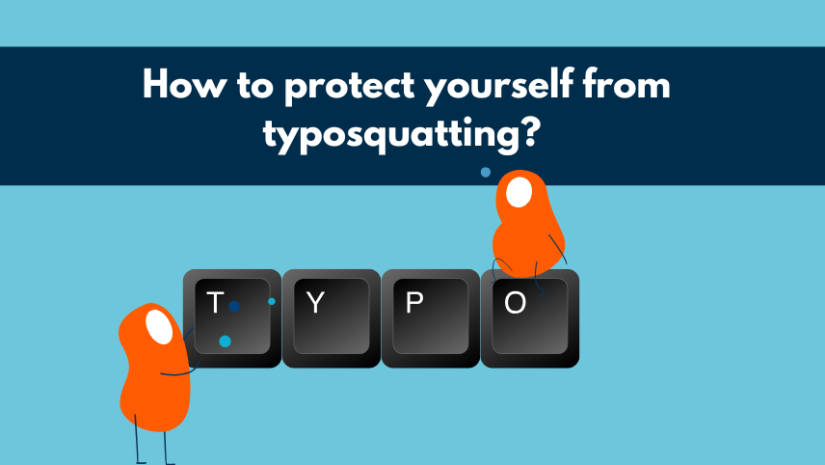
Comment vous protéger contre le typosquatting ?
Imaginez qu, dans une atmosphère de calme ininterrompu, vous commenciez à remarquer une baisse de trafic sur votre site web ou une diminution du nombre de nouveaux acheteurs dans votre boutique en ligne. Convenons que c'est la version optimiste.
Dans la version pessimiste, vous remarquez des avis clients négatifs se plaignant de la qualité de “vos” produits (ou services) que vous ne fournissez pas.
Quelque chose de mauvais se passe. La situation devient tendue. Vous perdez des revenus et subissez les conséquences d'un travail que vous n'avez pas fait.
Quelqu'un vous imite-t-il ? Quelqu'un est-il un pas en avant de vous ? Un objectif insaisissable.
Est-ce possible ?
Malheureusement, oui. De nos jours, il est possible, par exemple, d'imiter un concurrent. Faire des affaires sur Internet facilite cette pratique.
Et si la concurrence n'existait pas ?
Imaginez que vous tenez un magasin de cosmétiques dans une boutique traditionnelle située sur la rue piétonne principale. Une belle boutique avec une vitrine en verre et une enseigne au néon portant le nom “Roksanna Natural Cosmetics.”
Après un certain temps, vous apprenez de vos clients réguliers que de l'autre côté de la ville, un ancien négociant en devises bien connu, M. James, a ouvert un magasin de cosmétiques avec une enseigne portant le nom “Roxanna Cosmetics Store.” Est-ce une concurrence sérieuse ? Un peu, mais pas si perceptible. La distance entre les locaux est une barrière, l'assortiment est différent, et l'esthétique, les impressions visuelles et la qualité du service font la différence entre les deux magasins.
Toutes les barrières géographiques et interpersonnelles disparaissent automatiquement lorsque vous lancez votre boutique en ligne. Vous la lancez et l'appelez roksannadrogeria.pl. C'était un coup de maître. Son chiffre d'affaires, son trafic, ses avis — tout croît à un rythme organique approprié. Le proverbe “vous récoltez ce que vous semez” se vérifie.
À un moment donné, vous remarquez une diminution du trafic sur le site web et une baisse des nouveaux acheteurs dans votre boutique en ligne. Pire encore, il y a des avis négatifs de clients se plaignant de la qualité de “vos” produits et des expéditions qui, étonnamment, ne sont pas de votre fait.
Ce qui devait arriver est arrivé. M. James a également lancé une boutique de cosmétiques en ligne.
Nous pouvons deviner sous quel nom de domaine (indice : roxannadrogeria.pl).
Il est maintenant certain que la pharmacie en ligne de M. James, Roxanna Drogeria, est votre concurrence directe. Vous vous battez pour les mêmes clients et des clients similaires.
Et cela aurait pu être évité
Vous considérez cela comme un comportement absurde, contraire à l'éthique, une violation des principes de la concurrence loyale par M. James, le “businessman.” Réfléchissons à ce que vous avez comme atouts dans ce cas.
- Lorsque vous avez acheté le domaine roksannadrogeria.pl, vous êtes-vous assuré d'acheter ses formes fléchies et ses extensions de domaine ?
- Avez-vous un certificat de protection juridique pour la marque de votre entreprise ?
Si les deux réponses sont négatives, je suis désolé de dire que vos cartes sont très faibles dans ce jeu.
Bien sûr, vous pouvez engager un litige. Mais d'abord, évaluez le temps passé sur la bataille judiciaire, sur les frais d'avocats, sur l'exécution effective du jugement du tribunal. Cela en vaut-il la peine ?
Le dicton “errer est humain” est dépassé
Et cela aurait pu être remédié en examinant votre nom de domaine et en créant un scénario hypothétique de vos concurrents vous imitant.
Nous parlons d'une technique de piraterie Internet appelée “typosquatting.” Une erreur dans un domaine web peut amener un utilisateur à atterrir sur un site web complètement différent (par exemple, une marque concurrente) ou un faux site web (par exemple, une banque), où il fournit sans le savoir ses identifiants et son identité. Par exemple, au lieu d'aller sur le site cible roksannadrogeria.pl, l'utilisateur visitera roxannadrogeria.pl.
Le typosquatting et le cybersquatting sont le fléau d'Internet. Ce sont des outils rentables pour toutes sortes de cybercriminels. Malheureusement, ils poussent les gens (en particulier les personnes âgées et/ou celles qui sont distraites dans la vie) à craindre et à résister à faire des achats et des transactions financières sur Internet.
Le typosquatting consiste à exploiter les fautes d'orthographe dans un nom de marque dans un domaine Internet (par exemple, omet.pl au lieu de onet.pl, alllegro.pl au lieu de allegro.pl — pour des raisons de sécurité, je déconseille de visiter des sites web suspects. Le cybersquatting consiste à reproduire fidèlement un nom de domaine et à intercepter le trafic. Les deux activités sont illégales, impliquent du piratage Internet et représentent une menace pour la cybersécurité des entreprises. Elles visent souvent à : vendre le domaine à un prix plus élevé, imiter une marque, transférer le trafic vers le site web d'un concurrent ou d'un criminel, diriger l'utilisateur vers un faux site web, extorquer des données financières ou voler des données personnelles.
Comment pouvez-vous vous protéger contre le typosquatting ?
Tout le monde a le droit de faire des erreurs. Si vous faites accidentellement une faute de frappe en tapant un nom de domaine, vous devriez pouvoir compter sur une redirection vers le bon site web. À mon avis, cela devrait être une pratique standard, surtout pour les entreprises qui jouissent d'un haut niveau de confiance du public.
Les grands acteurs du marché se soucient de la sécurité de leurs utilisateurs. Ils auraient certainement pu se permettre d'acheter à l'avance des domaines “typo” (c'est-à-dire de créer une stratégie de présence de domaine) ou de racheter des domaines (ne nous attardons pas sur combien a été dépensé pour les négociations) ou d'acquérir légalement des domaines confusément similaires (j'explique cela à la fin de cet article).
Voyez ce qui apparaît lorsque vous entrez des noms de domaine incorrects : gogle.com, anazon.com, fasebook.com. Ces exemples illustrent clairement que le dicton “près n'est pas suffisant” est vrai. Soit vous devancez les cybercriminels, soit ils vous devancent.
La faute incombera toujours au propriétaire de la marque
Supposons que les utilisateurs d'Internet aient le droit de faire des fautes de frappe. En respectant cette règle, il est dans l'intérêt de chaque entreprise qui se respecte de minimiser le risque de surprises désagréables lors de la redirection des utilisateurs vers un faux site web ou un site web concurrent.
Pour protéger votre bon nom et le bien-être de vos clients contre le typosquatting, créez une stratégie de présence de domaine. Complétez une liste de contrôle contenant 5 domaines d'analyse :
- Identifiez les fautes de frappe et les erreurs d'orthographe possibles dans le nom
À ce jour, j'ai encore des problèmes avec l'orthographe correcte du nom de la chaîne de pharmacies “rosman.” Je donne délibérément l'orthographe phonétique pour vous encourager à taper vous-même le nom de domaine correct. Réussirez-vous du premier coup ?
- Variations fléchies dans le nom
Cela s'applique en particulier aux noms en langues étrangères ou aux formes de nom créatives, par exemple, Zalando vs. znalando, Erli vs. earli, Decathlon vs. decatlon.pl, Media Expert vs mediaekspert, Huawei vs huawai.pl, McDonalds vs mcdonald.pl.
- Signes de ponctuation
Si vous avez un nom à deux mots, assurez-vous d'enregistrer le domaine “avec” et “sans” un trait d'union. Donc, si vous avez le domaine abcxyz.pl, devenez le propriétaire du domaine abx-xyz.pl.
Il est dommage que cette astuce n'ait pas fonctionné pour les marques présentes dans les domaines : x-kom.pl, home-you.pl, zielony-parapet.pl, mi-home.pl.
- Achat d'extensions alternatives
Lorsque vous achetez un nom de domaine .pl, assurez-vous d'avoir également d'autres extensions tout aussi importantes : .com.pl, .net.pl, .com, .eu, .biz.
Si vous dirigez une entreprise internationale (par exemple, une entreprise de transport), envisagez d'acheter des domaines dans les pays voisins, par exemple, .de, .cz, .fr, .dk.
Cybersquatting écrit en cyrillique
Dans le cadre de la spécificité, je vais présenter une forme spécifique de cybersquatting. C'est la forme la plus malveillante, insidieuse et dangereuse d'imitation des domaines de marques bien connues et d'institutions de confiance publique. Elle consiste à remplacer des lettres de l'alphabet latin par des lettres trompeusement identiques d'autres systèmes d'écriture, principalement cyrillique et grec.
Voici quelques façons possibles et sournoises de remplacer l'alphabet latin afin de créer un clone d'un site web (par exemple, une banque)
- la lettre cyrillique “а” ressemble à la “a” polonaise, elle ressemble et sonne identiquement,
- la lettre cyrillique ‘с’ ressemble à la “c” polonaise, mais se prononce comme “s,”
- la lettre cyrillique “р” ressemble à la “p” polonaise, mais c'est la lettre “r”,
- la lettre cyrillique “х” ressemble à la lettre ‘x’ et se prononce comme la “ch” polonaise,
- la lettre cyrillique “у” ressemble à “y” mais se prononce comme la “u” polonaise,
- la lettre cyrillique “н” ressemble à “H” mais se prononce comme “n”,
- la lettre cyrillique “з” ressemble au chiffre ‘3’ mais se prononce comme la lettre “z”,
- lettre grecque. “ν” ressemble à “v” et se prononce “ni,”
- la lettre grecque “ο” pour ‘o’ et se prononce “o.”
Vous pouvez deviner les risques associés aux cybercriminels utilisant une orthographe “alternative” du domaine d'une marque bien connue (une soi-disant attaque homoglyphique) :
- domaine faux paypal.com (la lettre ‘p’ a été remplacée par la lettre cyrillique “р”),
- domaine faux : νisa.com (lettre grecque “ν” au lieu de “v”),
- domaine faux : gοοgle.com (lettre grecque “ο” au lieu de “o”),
- domaine faux : шp.pl (cyrillique “ш” au lieu de “w”),
- domaine faux : рекаo.pl (cyrillique ‘к’ au lieu de “k”).
Oui, les marques populaires du secteur financier, des e-boutiques et des réseaux sociaux sont et continueront d'être ciblées. Mais pouvez-vous garantir que votre site web ne tombera pas entre les mains de cybercriminels dans un avenir proche ?
Est-il possible de faire face aux trolls d'Internet ?
Nous recommandons de prendre soin des outils dans le domaine des mesures passives. Ils couvrent des questions liées à la propriété intellectuelle.
Assurez-vous d'enregistrer votre nom auprès du bureau des brevets approprié. Vous obtiendrez un puissant outil pour protéger le bon nom de votre entreprise et de votre marque. Personne ne pourra utiliser un nom de domaine contenant une faute de frappe ou des modifications délibérées du nom.
Si votre nom et, par conséquent, votre nom de domaine Internet obtiennent le statut de marque, vous pouvez légalement utiliser le tribunal pour saisir un domaine “illégal” (par exemple, celui mis en vente). Tout ce que vous devez faire est de prouver l'imitation de votre marque, la mauvaise foi ou la concurrence déloyale.
ICANN a introduit des réglementations permettant aux propriétaires de marques de récupérer des domaines qui portent atteinte à leurs droits de marque. Par exemple, la procédure UDRP (Uniform Domain-Name Dispute-Resolution Policy) vous permet de demander le transfert d'un domaine ou sa désinscription du système DNS sans possibilité de réclamer des dommages-intérêts.
Il est maintenant clair que si votre nom n'est pas une marque légalement protégée, vous perdez de forts avantages dans la lutte pour votre bon nom.
Bien que le typosquatting et le cybersquatting soient des formes créatives de fraude, les entrepreneurs ont également des moyens créatifs de se défendre contre de tels trolls d'Internet. Je recommande fortement d'agir avant, plutôt qu'après, qu'un incident cybernétique dangereux ne se produise.
Le propriétaire d'une agence de nommage pour des tâches rapides et difficiles, Syllabuzz.pl. Travaille de manière persistante jusqu'à créer un nom exceptionnel. Se spécialise dans le Nommage, le Renommage et le Rebranding. Croît qu'avoir un nom intéressant et intemporel qui génère des bénéfices en vaut la peine.
Catégories
Articles similaires et recommandés

Articles récents


Articles récemment populaires